
Hojicha vs matcha: which one is for you?
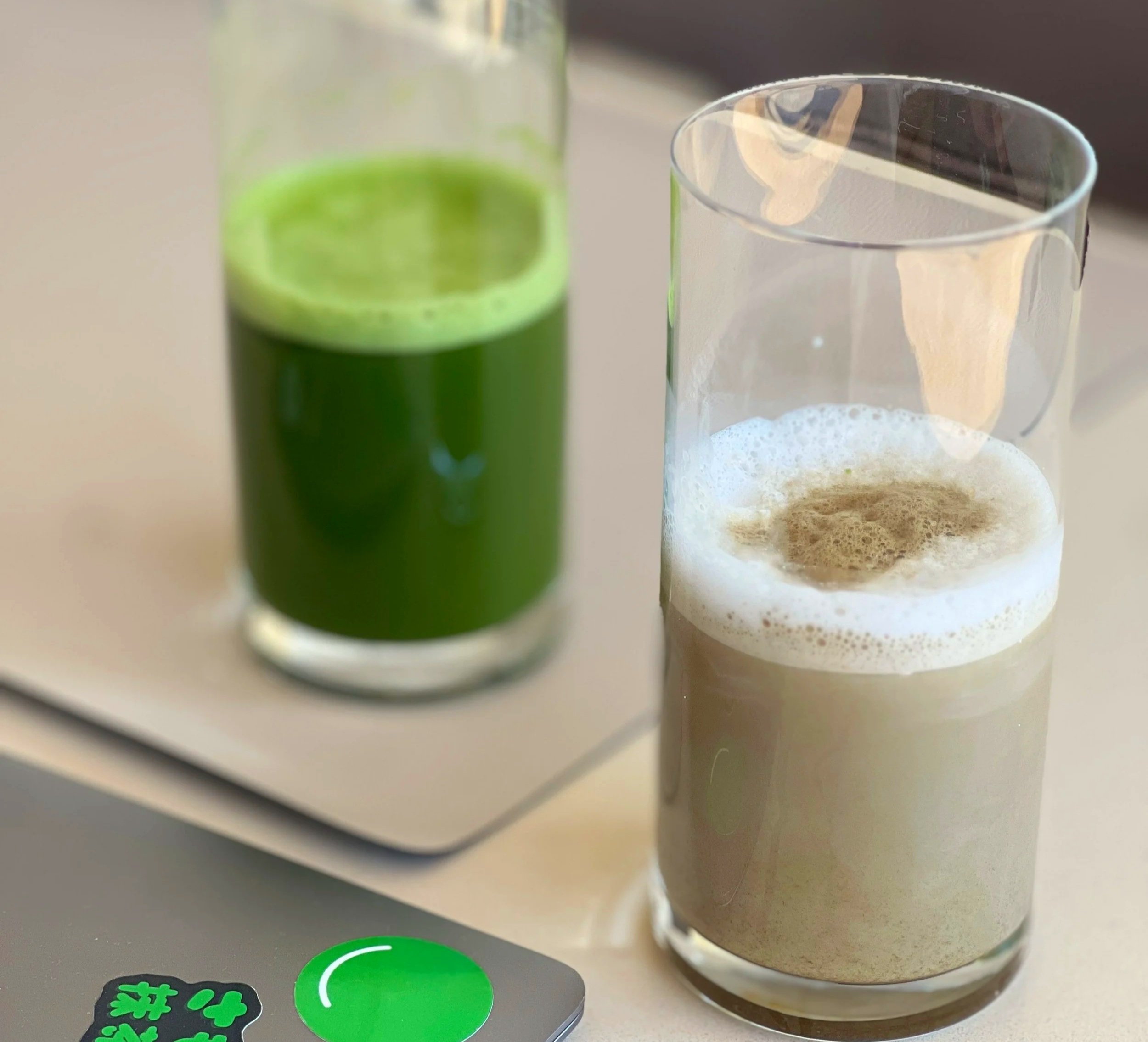
They’re both Japanese powdered green teas, but matcha is ground from shade-grown leaves while hojicha is ground from roasted ones. The result: matcha is bright green and gives you a focused lift, hojicha is amber, nutty and gentler, with less caffeine. Here’s how to choose.
| Matcha | Hōjicha | |
|---|---|---|
| Processing | Shade-grown leaves, finely stone-ground into powder | Leaves roasted at high heat, then ground into powder |
| Colour | Vivid, bright green | Amber to reddish-brown |
| Flavour | Fresh, vegetal, umami with a hint of sweetness | Warm, roasted, nutty, with caramel notes |
| Caffeine | Higher | Lower |
| Best time of day | Morning, before work or training | Afternoon, evening, before bed |
| Preparation (water temperature) | 70–80 °C | 80–90 °C |
| Best for | Straight matcha, matcha latte | Latte, baking, ice cream |
What is Matcha?
Matcha is finely ground green tea powder made from specially cultivated leaves that spend their final weeks before harvest in the shade. Shading pushes the plant to develop more chlorophyll and amino acids — that’s where matcha gets its vivid green colour and its signature umami flavour, with a fresh, slightly sweet vegetal note and a touch of pleasant bitterness.
Because you’re drinking the whole leaf in powdered form, matcha delivers far more antioxidants than steeped green tea. The caffeine arrives steadily, buffered by L-theanine — so it keeps you focused, without the spike and crash.

What is Hōjicha?
Hōjicha is a roasted Japanese green tea. It was developed as a way to enjoy green tea in a mellower, less grassy form — the roasting process transforms the leaves, turning them reddish-brown and shifting the flavour into a warm, nutty profile with hints of caramel and smoke.
You can enjoy it as whole roasted leaves or as a fine powder, which gives it real versatility in the kitchen. One big difference from matcha: hōjicha has significantly less caffeine. That makes it perfect for anything that should feel soothing — an afternoon ritual, an evening warm drink, or a cup with dessert — without worrying it will keep you up.
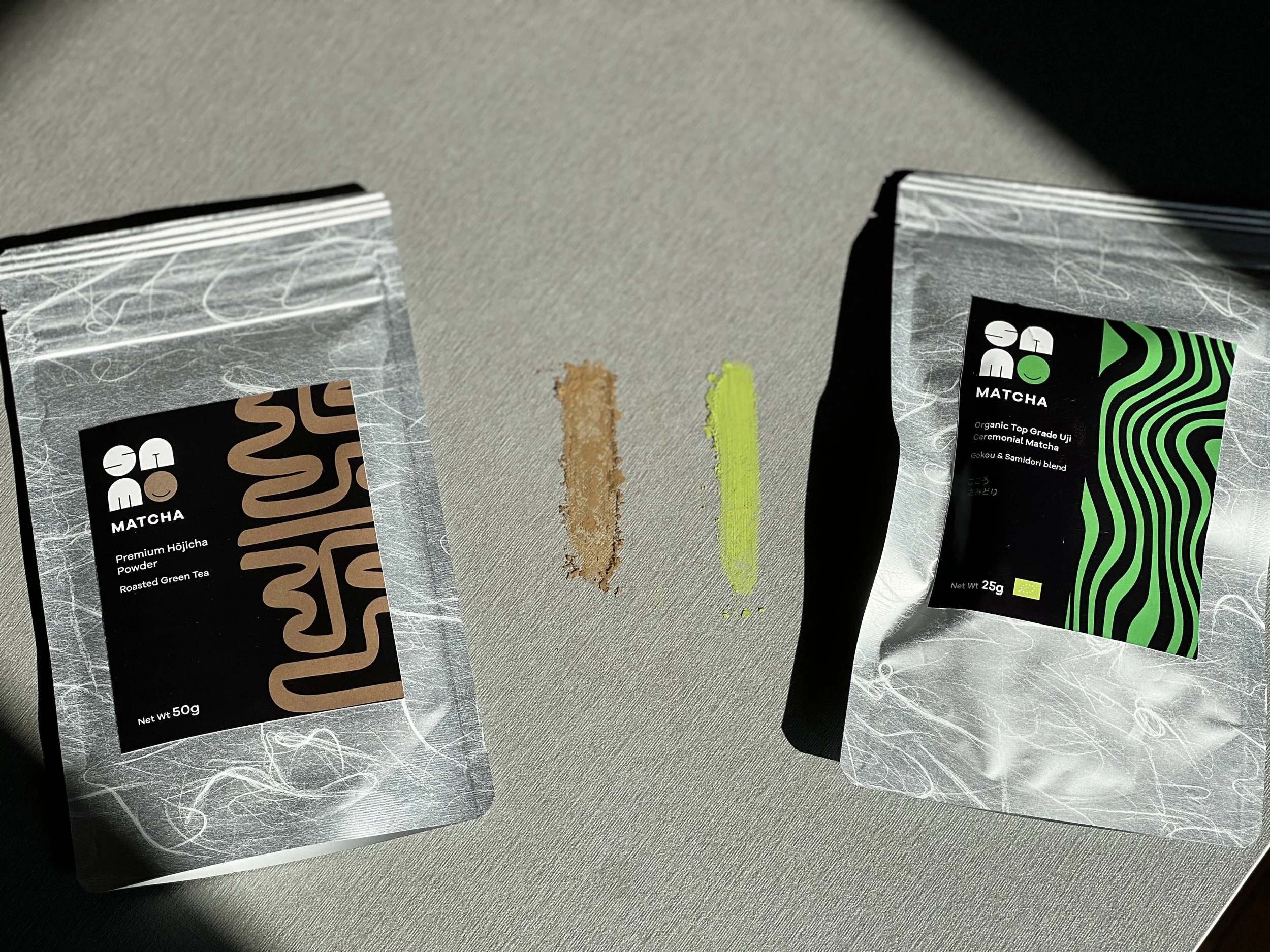
If it’s your first time trying it, we recommend our Premium Mori Hōjicha powder 50 g — smooth, roasted, with a caramel note that works beautifully with milk.

Flavor profile
Matcha: fresh and vegetal, with a creamy texture when properly whisked; an intense, green aroma that wakes you up on the spot.
Hōjicha: warm, roasted, nutty, with gentle sweetness; a comforting, slightly smoky aroma reminiscent of chestnut or caramel.
If you love espresso and dark chocolate, hōjicha will probably click first. If you’re already drawn to green, fresh flavours (matcha ice cream, fresh herbs, lime), matcha is your natural pick. The best way to find out what suits you: try both plain, without milk or sweetener.
Caffeine Content & Energy
Matcha: higher caffeine, but paired with L-theanine for a clean, focused energy without a hard crash. Ideal for mornings, before a demanding task, or before training.
A simple rule: if you know you’re sensitive to caffeine or plan to enjoy your tea after dinner, start with hōjicha. If you need focus for a day full of meetings, reach for matcha.
A simple rule: if you know you’re sensitive to caffeine or plan to enjoy your tea after dinner, start with hōjicha. If you need focus for a day full of meetings, reach for matcha.
How to Enjoy Them
Matcha: classically whisked with a bamboo chasen whisk and hot water (not boiling — around 70–80 °C) into a frothy, ceremonial-style drink. It works just as well in lattes, smoothies and desserts. For straight ceremonial matcha, go for Organic Gokou & Samidori Uji Ceremonial Matcha 30 g.
Hōjicha: you can brew it like traditional tea, hot or iced. If you have the powder, whisk it with water at 80–90 °C — just like matcha — for a beautifully frothy cup that pairs wonderfully with milk, in baking, and as a dusting on ice cream.
Hojicha latte recipe
A warm ritual for cooler days, five minutes of work.
For one cup (about 250 ml):
1 tsp Premium Mori Hōjicha powder (about 2 g)
50 ml hot water (80–90 °C)
200 ml milk of your choice (dairy, oat, almond)
honey or maple syrup, optional
Method:
Sift the hōjicha powder into your cup to avoid lumps.
Add the hot water and whisk with a bamboo chasen (or a small milk frother) into a smooth, foamy base.
Warm your milk and froth it gently.
Pour the frothed milk over the hojicha base.
Sweeten to taste and enjoy while it’s warm.
For an iced version: whisk the powder with a splash of cold water, fill a glass with ice, top with cold milk and stir. Perfect for summer afternoons.
Which Is Right for You?
If you’re looking for an energising, bright green tea packed with antioxidants and bold umami, matcha is your go-to. If you want a mellow, cosy tea with warm, roasted flavour and less caffeine, hōjicha is a delicious choice.
A lot of tea lovers end up keeping both on hand: matcha for mornings and focus, hōjicha for winding down and the evening ritual. If you’d like to try both at once, our Matcha & Hōjicha Bundle gives you one tin of each — and makes a lovely gift.
FAQ
-
No. They’re both Japanese green teas, but completely different. Matcha is made from shade-grown leaves that are then stone-ground into a bright green powder rich in chlorophyll and amino acids. Hojicha is made from leaves that are roasted at high heat, which gives them an amber colour and a warm, nutty flavour. Hojicha is gentler, easier on the stomach, and significantly lower in caffeine.ption text goes here
-
Yes, but considerably less than matcha or regular green tea. Because the leaves are roasted at high temperatures, part of the caffeine breaks down — which is why hojicha is a favourite for the afternoon and evening. You still get a warm, comforting ritual without worrying about your sleep. If you’re caffeine-sensitive or avoid it after lunch, hojicha is an ideal pick.
-
Both are healthy, in different ways. Matcha has more antioxidants (especially catechins and EGCG) and pairs caffeine with L-theanine for clean, long-lasting energy and focus. Hojicha is easy on digestion, soothing, and because of its low caffeine it can be enjoyed late in the day without affecting sleep. The best answer: both. Matcha for mornings and focus, hojicha for evening calm.e
-
It’s simple: whisk 1 tsp of hōjicha powder with 50 ml of water at 80–90 °C until foamy, then top with 200 ml of frothed milk. Sweeten with honey or maple syrup to taste. For an iced version, whisk the powder with a splash of cold water, add ice and cold milk. Full recipe is above in this post.

Experience the best of both worlds.
This bundle includes one Organic Gokou & Samidori Uji Ceremonial Matcha (25g) and one Premium Mori Hōjicha Powder (50g), two authentic Japanese green teas.
Bright, energizing matcha meets warm, roasted hōjicha. Perfect for mindful mornings and cozy evenings.
Price on 10. 9. 2026.: 37 €
