
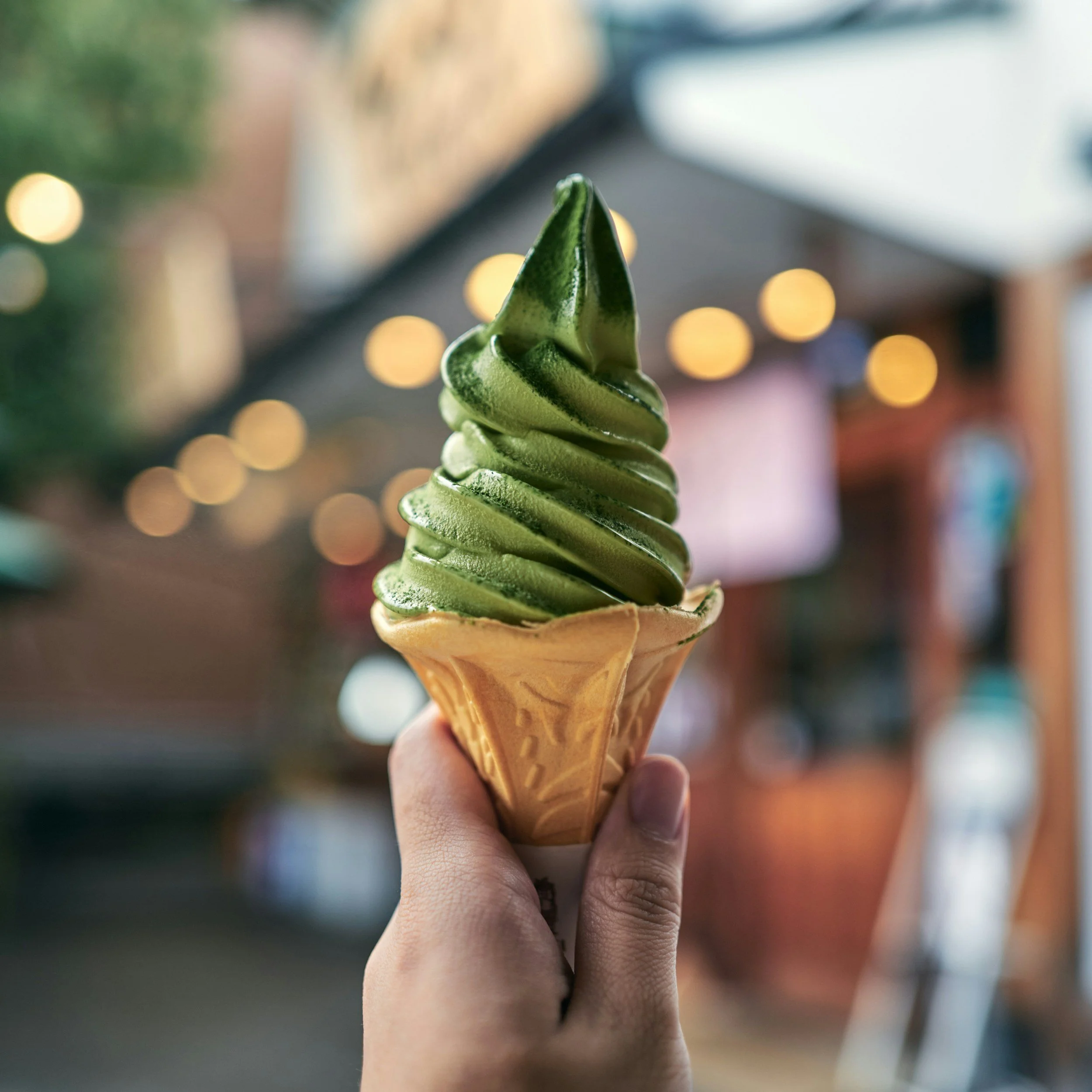
If you've shopped for matcha before, you've probably noticed two main categories: ceremonial grade and culinary grade. They look similar, but they're made for very different purposes. Here's how to tell them apart and which one you actually need.
Ceremonial Grade Matcha
Ceremonial grade is the highest quality matcha available. It's made from the youngest, most tender tea leaves, stone-ground into an ultra-fine, vibrant green powder. It has a naturally smooth, slightly sweet flavor with very little bitterness, which is why it's traditionally whisked with hot water and enjoyed on its own, no sweeteners or milk needed.
Best for: drinking straight, traditional preparation, daily rituals
Culinary Grade Matcha
Culinary grade matcha is made from slightly more mature tea leaves, giving it a stronger, more robust flavor. It's more bitter on its own, which is exactly why it works so well when mixed with other ingredients, milk, sweeteners, or baked into recipes. It's typically more affordable and produced in larger quantities.
Best for: lattes, smoothies, baking, cooking

A Note on the Labels: "Culinary Grade" Is a Western Category
Here's something most matcha shops won't tell you: "culinary grade" (and "ceremonial grade", too) is not an official classification in Japan. Unlike wine or sake, matcha has no government-regulated grading system. These terms were popularized by Western brands and importers as a simple way to separate matcha for drinking straight from matcha for mixing, baking, and cooking.
Why did that happen? Outside Japan, most people meet matcha through lattes, desserts, and smoothies rather than a traditional tea bowl. Shops needed an easy way to tell customers which powder suits which use, and a two-label system did the job. The labels are still useful as a rough guide to taste and purpose, but they don't guarantee quality on their own, and two brands can use the same word for very different products.
In Japan, quality is judged by what you can see, smell, and taste: the vibrancy of the green color, the fineness of the powder, the aroma, and the balance of umami, sweetness, and bitterness. So when you're shopping, look past the label. Check the origin, whether it's organic, how fresh it is, and how it tastes.
The Key Differences at a Glance
Flavor: Ceremonial is smooth and mellow; culinary is bolder and more bitter
Color: Ceremonial is a brighter, more vivid green; culinary tends to be slightly darker or duller
Texture: Ceremonial is finer and silkier; culinary can be slightly coarser
Use: Ceremonial is sipped straight; culinary is mixed into drinks and recipes
Price: Ceremonial is generally more expensive due to the quality of leaves and processing
So Which One Should You Choose?
If you're planning to whisk a bowl of matcha and drink it as-is, go ceremonial. If you're making a matcha latte, smoothie, or baking matcha muffins, culinary grade will do the job beautifully and save you a bit of money in the process.
At SAMO Matcha, our Otsuka Ceremonial Matcha works for both worlds: it's smooth enough to sip solo and versatile enough for your favorite latte recipes.
